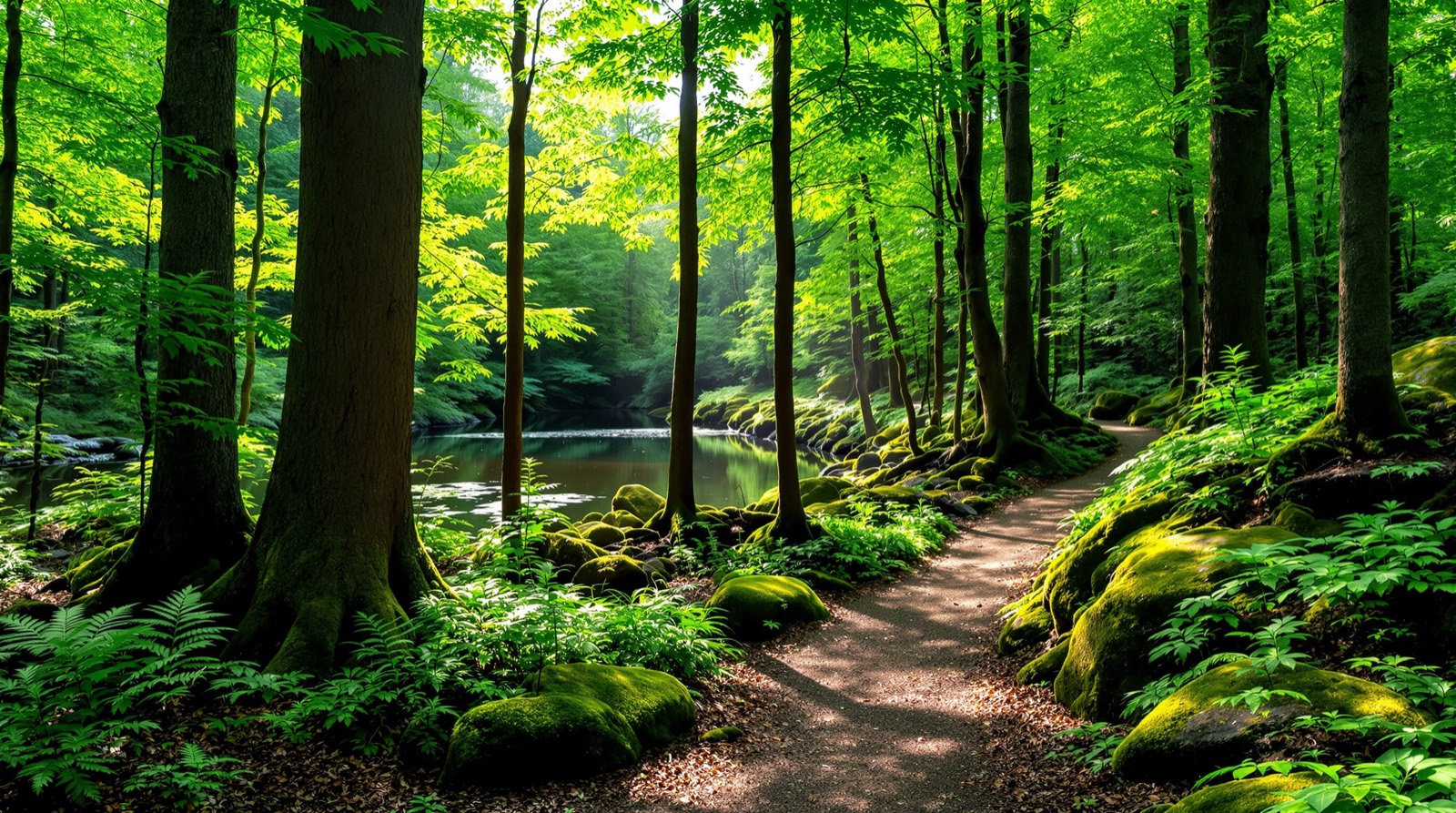
Outdoor Recreation & the Monadnock Forests
More than almost anywhere in southern New England, the Monadnock Region is defined by protected land. Generations of conservation have left a patchwork of state parks, town forests, and reservations that together give the region an outsized network of trails, waters, and quiet woods to explore.
A Conserved Landscape
The reason the forests are so accessible is a long tradition of land protection. The Society for the Protection of New Hampshire Forests and local land trusts have conserved thousands of acres across the region, including much of Mount Monadnock itself. The result is that public trails often connect across property lines, allowing long walks that would be impossible in more developed parts of New England.
Trails for Every Ability
The hiking ranges from the demanding rock scrambles of Monadnock’s summit routes to gentle, nearly level paths around ponds and through mature woods. Many town forests offer well-marked loops of a mile or two — ideal for families or a quick morning walk — while long-distance routes like the Monadnock–Sunapee Greenway and the historic Wapack Trail link the region’s major peaks for multi-day treks.
Mud Season and the Shoulder Months
Between snowmelt and the drying of the high ground — roughly late March into May — the upper trails turn soft, and walking them does damage that takes years to grow over. Land trusts and trail groups ask hikers to stay low and hard-surfaced through those weeks: rail trails, gravel town-forest loops, and the wider woods roads all take traffic without scarring. It is the least glamorous advice in any trail guide and close to the most useful thing a visitor can do for the place.
Rivers, Ponds & Paddling
The Contoocook and Nubanusit rivers, along with Dublin Lake, Thorndike Pond, Nubanusit Lake, and many smaller waters, make the region a paddler’s pleasure. Canoeing and kayaking are popular on the calmer waters, and several sites offer public boat launches. The Contoocook is one of the few rivers in the country that flows north, a bit of local trivia that river guides never tire of sharing.
Fishing & Angling
Cold, clean streams and stocked ponds make for rewarding fishing. Brook trout haunt the smaller streams, while the lakes hold bass, pickerel, and stocked trout. The New Hampshire Fish and Game Department stocks many waters each spring, and a state license — easily obtained online — is required. Fly-fishers and families with a couple of spinning rods alike will find water to suit them.
Wildlife & Birding
The mix of forest, field, and water supports abundant wildlife — moose and black bear in the deeper woods, beaver and heron along the waterways, and one of New England’s best hawk-watching sites atop Pack Monadnock each fall, where volunteers tally thousands of migrating raptors. Birders, photographers, and hunters all find their season here, and the Appalachian Mountain Club maintains resources for planning trips throughout the region and beyond.
The Conservation Ethic
Access here depends on stewardship. Much of the open land is privately conserved or town-owned, kept open by the goodwill of owners and the care of visitors. Stay on marked trails, leash dogs where posted, carry out trash, and respect seasonal closures for wildlife. In return, the region offers something increasingly rare: room to roam. Continue to our pages on camping, cycling, and winter recreation.