Peterborough: The Real “Our Town”
Few small towns in America carry as much cultural weight as Peterborough, New Hampshire. Chartered in 1760 and settled along the Contoocook and Nubanusit rivers, it grew from a mill village into something rarer: a working New England town that also became a magnet for writers, composers, and artists. Its influence reaches far beyond its modest population.
The Town Behind the Play
Peterborough is widely cited as the inspiration for Thornton Wilder’s Our Town, the 1938 Pulitzer Prize-winning play whose fictional Grover’s Corners has become shorthand for the American small town itself. Wilder wrote portions of the play while in residence at the MacDowell artists’ colony just outside the village, and the play’s unadorned staging — a bare stage, a stage manager, the daily rhythms of ordinary life — drew on the texture of towns exactly like this one. Generations of theatregoers who have never set foot in New Hampshire nonetheless carry an image of it, filtered through Grover’s Corners. To this day the region’s stage tradition reflects that legacy.
MacDowell and the Creative Legacy
The reason so many artists passed through is MacDowell, founded in 1907 as one of the first artist residencies in the United States. Composers Edward MacDowell and Marian MacDowell established it on their Peterborough farm, and in the decades since it has hosted thousands of fellows — among them Leonard Bernstein, Aaron Copland, James Baldwin, Willa Cather, and Alice Walker. You can read more about the residency’s history through MacDowell itself. Its presence helped seed a density of galleries, music, and theatre that still defines the regional arts scene today.
A Library for Everyone
Long before it was known for the arts, Peterborough made history of a quieter kind. The Peterborough Town Library, established in 1833, is commonly recognized as the first public library in the world to be supported by municipal taxation and free to all residents — a genuinely radical idea at the time, and one that helped inspire the free-library movement across America. The institution still anchors the town’s civic life nearly two centuries later, a reminder that Peterborough’s habit of quiet innovation is older than its fame.
Mills, Rivers, and Main Street
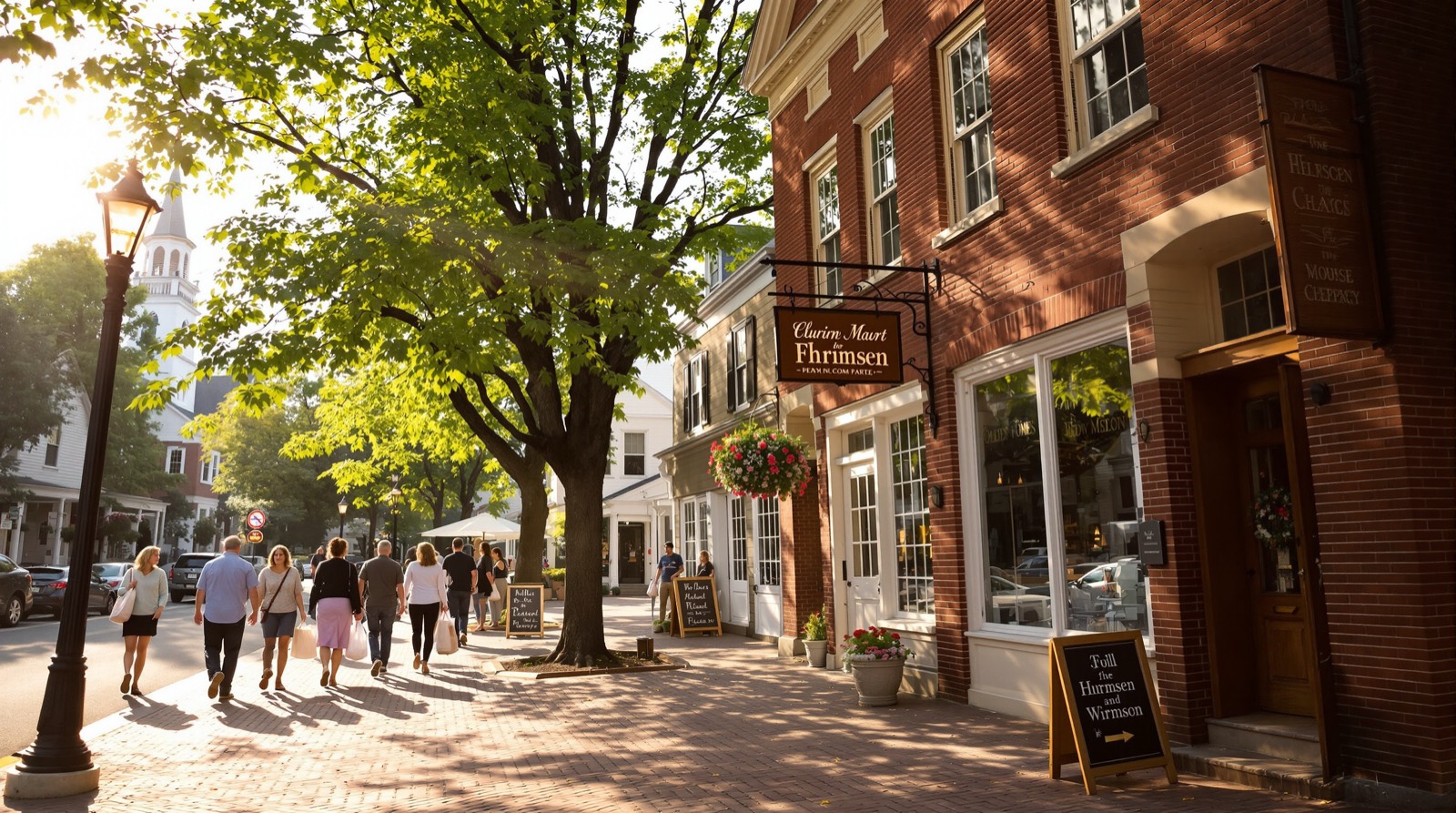
The Contoocook River that drew the first settlers also powered the mills that built the nineteenth-century town, and the compact, walkable downtown that resulted remains one of the most appealing in the state. Brick storefronts, a working Main Street, independent shops, bookstores, and cafes give the village a lived-in vitality that many older New England downtowns have lost. It is a place designed, almost accidentally, for strolling — and the surrounding villages of Hancock, Dublin, and Jaffrey Center preserve their own nineteenth-century character just as carefully.
A Region of Letters
The literary thread runs through the whole area. Neighboring Dublin has long been associated with New England publishing, and novelist Willa Cather so loved the view of Monadnock that she chose to be buried within sight of it, in the old burying ground at Jaffrey Center. Writers, editors, and printers have found the region’s quiet as productive as any residency — part of a creative continuity that stretches from the nineteenth century to the working artists who live here now.
Why the Heritage Still Matters
Heritage here is not a museum piece; it is the reason the town still functions the way it does. The library, the residency, the rivers, and the theatres are all still in use, and the values behind them — access, creativity, community — continue to shape daily life. For a visitor, understanding that history is the key to understanding why Peterborough feels different from a hundred other pretty New England villages. Continue to the region’s attractions and landmarks, or plan a broader visit to the Monadnock Region.